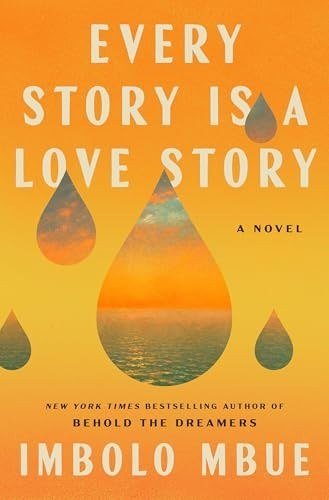
Every Story Is a Love Story begins with a question that has no comfortable answer: what do you owe the person responsible for the worst moment of your life? Wolo has spent three years grieving Yoma and the twins she was carrying, while Victoria has spent those same years living with the knowledge that she was behind the wheel. When she writes asking to meet him, everyone around Wolo has an opinion about what he should do. His decision to answer her is not presented as immediate forgiveness; it begins with anger, curiosity, and the need to understand a version of the accident he has never been able to accept.
Wolo is the strongest part of the novel because Mbue allows grief to make him difficult without reducing him to sadness. He misses Yoma deeply, but his memories of their marriage are not polished into a perfect romance simply because she is dead. Their relationship had complications, disagreements, family pressure, and moments that look different to him now than they did when she was alive. That makes the grief more believable because Wolo is mourning a real person rather than an idealized symbol of everything he lost.
Victoria is handled with similar care. Mbue does not ask the reader to forget that her actions caused Yoma’s death, but she also refuses to let one terrible event become the only thing that defines her. Her remorse is genuine, yet remorse does not automatically earn forgiveness, and the novel understands the difference. The most interesting scenes between Wolo and Victoria are the ones where neither person knows what the other is supposed to provide: apology, punishment, understanding, or simply someone else who remembers the same tragedy from the opposite side.
Wolo’s Cameroonian family gives the story another layer because forgiveness is not treated as a completely private decision. His relatives believe meeting Victoria risks dishonoring Yoma, and their reaction is shaped by grief as well as questions about race, privilege, and why Victoria was able to continue her life after the accident. Wolo therefore has to consider not only what might help him but what his choices mean to people who loved Yoma too. Mbue is especially good at showing how family support can become pressure when everyone believes they know the correct way for someone else to grieve.
The novel moves slowly in places, particularly during the long sections that return to Wolo and Yoma’s past. I understood why those memories mattered, but some could have been tighter because the present-day relationship between Wolo and Victoria carries enough tension on its own. The later developments are also deliberately surprising, and a few of them may feel slightly arranged to keep the moral questions growing. Still, the book rarely chooses the easiest emotional answer, which keeps its central idea from becoming sentimental.
What stayed with me most was the discomfort around forgiveness itself. Wolo begins to understand that releasing some of his anger does not mean deciding that what happened was acceptable, and Victoria has to learn that being sorry does not give her the right to be forgiven. That distinction gives the novel its emotional weight.
What I Liked
The moral tension between Wolo and Victoria is the strongest part of the novel because neither character is given an easy role. I also liked the way Mbue brings Wolo’s Cameroonian family into the question of forgiveness, showing that grief belongs to a wider network of people rather than only to the person closest to the loss. The memories of Yoma also prevent her from becoming merely the dead woman whose absence drives the plot.
What Could Be Better
The story can move slowly when it spends long stretches inside Wolo’s memories and family history, particularly once the present-day relationship with Victoria becomes compelling. A few later developments also feel slightly constructed to push the forgiveness question into even more complicated territory. The emotional material is strong enough that the novel probably did not need every additional complication.
Context Behind the Book
Imbolo Mbue is a Cameroonian American novelist and the author of Behold the Dreamers and How Beautiful We Were. Behold the Dreamers won the PEN/Faulkner Award for Fiction and became an Oprah’s Book Club selection. Born in Limbe, Cameroon, Mbue later studied at Rutgers and Columbia University and now lives in New York City. Her fiction often explores immigration, family, money, inequality, moral responsibility, and the difficult choices people make while trying to build lives between different cultures.