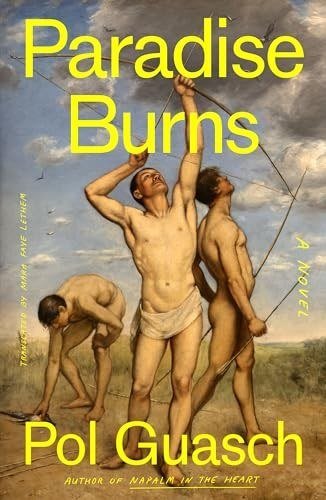
Paradise Burns is only around 160 pages, but it never feels small. Pol Guasch builds a damaged future without spending chapters explaining exactly how society reached this point. Water is scarce, fires keep returning, animals have nearly disappeared, and the remaining pieces of natural life are protected inside places such as a guarded greenhouse. The characters have grown up accepting much of this as normal, which makes the setting more unsettling than a long description of catastrophe would have been.
At the center are Rita and Líton, and their friendship is easily the strongest part of the novel. They meet because both are lonely in ways they do not immediately know how to explain, and that recognition becomes enough to keep them close. Their relationship is not pushed toward romance simply because the book needs another love story. They become the people who make life feel slightly more bearable for each other, and Guasch understands how important that kind of friendship can become when almost everything else feels unstable.
Líton’s illness changes the tone without turning the novel into a straightforward medical tragedy. The unnamed disease clearly echoes the early AIDS crisis, especially in the fear, stigma, uncertainty, and silence surrounding young gay men who become sick. Líton is also dealing with his relationship with René, another Service member, so illness becomes tied to desire, memory, and the way people are treated when society decides their suffering is uncomfortable to discuss. These sections are painful, but Guasch does not make Líton exist only as a victim.
The climate material works for a similar reason. The ecological collapse is always present, but the characters still go to parties, fall in love, argue, get bored, want better jobs, and make plans. Rita wants more than the poverty and exhaustion surrounding the Colony, while Líton wants time he gradually realizes he may not have. The novel understands that people do not stop wanting ordinary things just because the world is falling apart, and that makes the dystopian setting feel much closer than something built entirely around spectacular disaster.
The structure moves back and forth through time and uses different voices, conversations, and letters rather than following one clean timeline. Most of the time that works because memory is part of the story, but it can also make the book slightly disorienting. There were a few moments where I had to slow down and work out where a scene belonged in the characters’ lives. Still, I would rather have that looseness than a more conventional version of the story, because the fragmented form suits a novel about people trying to hold onto memories while everything around them disappears.
The best thing about Paradise Burns is that it does not confuse bleakness with hopelessness. Rita and Líton cannot repair the climate, cure the disease, or make the society around them fair, but their friendship still matters. Guasch gives that relationship enough warmth that the novel never becomes only a catalogue of suffering.