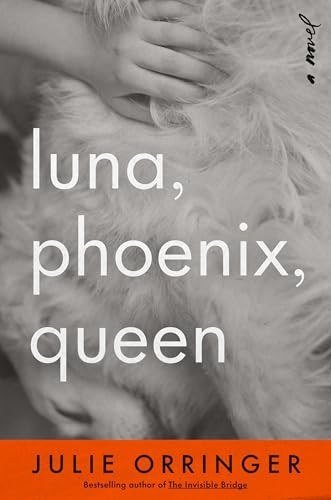
Luna, Phoenix, Queen begins with several forms of betrayal already waiting to collide. Dava has hidden both a love affair and a novel from her husband, while Barr responds to discovering that secret by committing a betrayal of his own. His decision to take Dava’s manuscript and publish it under his name is cruel, but Julie Orringer is more interested in how he convinces himself to live with it than in turning him into a simple villain. The result is uncomfortable in a useful way because love, resentment, envy, and grief remain tangled together throughout the book.
Dava’s illness gives the question of authorship much more weight. She is losing memory at the same time the work she created is being separated from her name, which makes Barr’s theft feel like more than ordinary plagiarism. Her novel becomes one of the few places where her private self survives clearly, including the relationship with Svetlana that she could never fully live in public. Orringer handles this material with restraint, allowing Alzheimer’s to change how the family remembers Dava without reducing her entirely to the disease.
The book moves through several characters rather than staying with one narrator, and that structure works especially well here. Barr, Dava, Svetlana, their children, Barr’s assistant Evie, and others each understand only part of what happened, so the story gradually changes shape as more perspectives appear. The injured dog first known as Luna and later as Phoenix moves through these lives almost like a quiet witness. She could easily have become an overly sentimental symbol, but Orringer mostly keeps her strange and slightly unknowable, which makes her presence more affecting.
The strongest theme for me is artistic ownership. Barr does not simply steal a manuscript because he wants money; he is a blocked novelist confronted with proof that his wife created something better than he expected. That mixture of admiration, jealousy, marital anger, and professional insecurity makes the theft psychologically convincing even when it remains impossible to excuse. The novel also asks what happens when a piece of writing becomes famous under the wrong name, especially when the person who actually created it is losing the ability to explain what happened.
My only reservation is that the shifting perspectives sometimes create emotional distance just when one character becomes especially compelling. The mosaic structure is central to the novel, but a few transitions arrive before the previous section feels completely finished. Even so, the different voices eventually reinforce the larger idea that no single person owns the complete truth about a marriage or a family. Rating: 4.6/5. It is intimate, morally uncomfortable, and beautifully controlled, with its strongest material coming from the connection between memory, authorship, betrayal, and the stories people use to make sense of one another.
What I Liked
The strongest part of the novel is the way plagiarism and memory loss are connected. Barr’s theft would already be disturbing, but Dava’s Alzheimer’s makes the loss of authorship feel much more personal and irreversible. I also liked the multiple perspectives because each character changes the meaning of what came before without simply revealing that someone else was lying. The dog’s role is unusual but surprisingly effective, giving the novel moments of tenderness without removing its moral tension.
What Could Be Better
The shifting points of view occasionally interrupt the emotional momentum, particularly when a character’s section becomes compelling just before the novel moves elsewhere. Some readers may also find the dog’s symbolic importance slightly unusual or overly deliberate. I would have liked a little more time inside Dava and Svetlana’s relationship, since it is central to both the secret novel and the emotional damage that follows.
Context Behind the Book
Julie Orringer is an American novelist and short-story writer whose books include How to Breathe Underwater, The Invisible Bridge, and The Flight Portfolio, the latter of which inspired the Netflix series Transatlantic. Her work has received the Paris Review’s Plimpton Prize for Fiction and fellowships from organizations including the Guggenheim Foundation and National Endowment for the Arts. Luna, Phoenix, Queen continues her interest in love, secrecy, artistic creation, history, and the complicated choices people make when private desire conflicts with the life they have already built.