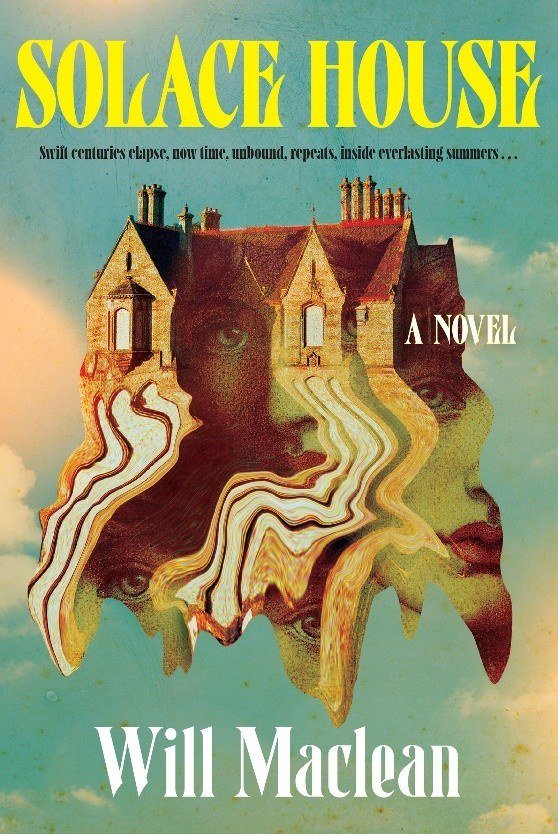
Solace House works because Will Maclean gives the mystery time to feel ordinary before it becomes frightening. Alex accepts the summer job mainly because he has nowhere else to go, and the first days inside the house involve dust, piles of junk, old magazines, petty arguments, and awkward friendships rather than obvious supernatural danger. That slow beginning gives the mansion a believable physical presence before the stranger material takes over. By the time Edwin Flayne’s journals begin suggesting that the house may contain a route to somewhere impossible, Alex and the reader have already spent enough time there for the discovery to feel genuinely unsettling.
The group of students gives the novel much of its dark-academia appeal. Ella quickly becomes especially important to Alex, but the wider crew also brings clashing personalities, jealousy, boredom, curiosity, and fear into the house. Maclean understands that discovering something extraordinary would not automatically make everyone cooperate; some people want answers, while others become increasingly uncomfortable with how seriously the journals are being taken. That disagreement creates tension even before the supernatural question is resolved. The house does not simply threaten the students from outside—the mystery begins changing the way they behave toward one another.
Flayne’s journals are probably the book’s strongest device. They introduce his missing mother, his obsession with Bewise, and his belief that another world can be reached through specific clues hidden in the property. The diary sections feel like an older gothic novel buried inside the modern story, and that contrast suits a book interested in whether stories can become dangerous when someone wants badly enough for them to be true. Maclean keeps the question of madness versus discovery open for a long time, which gives the middle section its best atmosphere. The reader is never completely sure whether the students are uncovering a real secret or simply learning how to inhabit Flayne’s obsession.
The novel is less effective when its length begins to show. At more than five hundred pages, the group spends a considerable amount of time exploring, arguing, interpreting journals, and following clues before the larger picture becomes clear. Publishers Weekly also notes the amount of minor squabbling, and I can understand why some readers may feel the story takes too long to reach its more dramatic material. I generally liked the gradual buildup, but a tighter middle would have made the sense of danger stronger without losing the slow-burn atmosphere.
The final section rewards much of that patience. Earlier details about the house, Flayne, the journals, and the students’ growing obsession begin fitting together in ways that make the book feel more carefully constructed than its deliberately messy opening suggests. Maclean moves from haunted-house unease into something closer to cosmic horror and fantasy without completely abandoning the emotional relationships that brought the characters there. The shift is ambitious and slightly strange, but it gives the novel an identity beyond a familiar “students enter creepy mansion” setup.
What stayed with me most was the book’s interest in obsession. Alex and Ella are drawn to the mystery partly because solving it gives their summer a sense of purpose, but curiosity gradually becomes harder to separate from need. Flayne’s journals offer the possibility that loss can be reversed and that another world might contain answers this one cannot provide.
What I Liked
The atmosphere and the gradual discovery of Flayne’s journals are the strongest parts of the novel. I liked that Solace House first feels cluttered and unpleasant rather than immediately supernatural, which allows the horror to build naturally. The conflict among the students also keeps the mystery grounded, while the later shift toward cosmic and speculative horror gives the story a much larger payoff than the opening initially suggests.
What Could Be Better
The 512-page length occasionally slows the suspense, especially in the middle where arguments, exploration, and journal interpretation begin repeating similar beats. Some members of the student group are also more memorable as personalities than as deeply developed characters. A slightly tighter version could have preserved the puzzle-box structure while making the final escalation arrive with even more force.
Context Behind the Book
Will Maclean is a British screenwriter and novelist whose television writing has included work with performers such as Alexander Armstrong, Miranda Hart, Al Murray, and Tracey Ullman. His first novel, The Apparition Phase, was shortlisted for the McKitterick Prize. Solace House is his American debut and continues his interest in ghosts, obsession, hidden histories, and the uncertain boundary between supernatural experience and psychological disturbance.