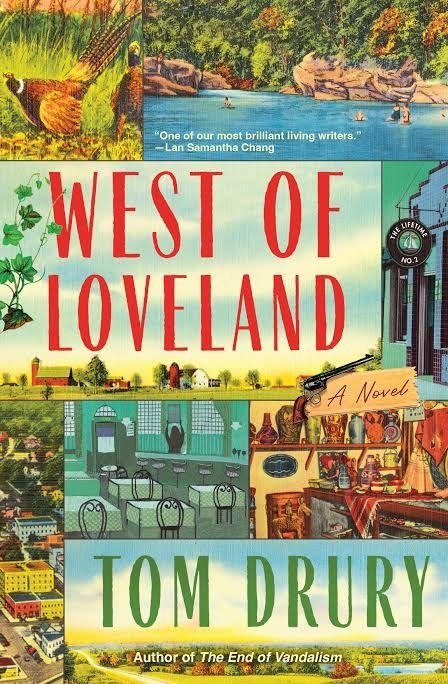
West of Loveland begins with the kind of object that usually promises a much faster novel: a loaded gun discovered beside the road. Tom Drury does investigate where it came from, but he is far less interested in turning the weapon into a standard thriller device than in following the people who have touched it, heard about it, or become connected through it. The mystery keeps the story moving while the real subject quietly becomes Grouse County itself. That approach gives the book an unusual tension: something dangerous is clearly coming, yet much of the novel is spent watching people work, eat, flirt, argue, remember, and make small decisions that seem unrelated until they are not.
Sheriff Dan Norman returns older, calmer, and more aware that the people around him cannot be reduced to the roles they once played. Other familiar characters from Drury’s earlier Grouse County novels return as well, including Louise and Tiny Darling, but the book does not depend entirely on nostalgia. Rocky and his teenage friends bring a younger energy into the story, and their problems are treated with the same seriousness as the older characters’ marriages, regrets, crimes, and unfinished relationships. One of the novel’s strengths is that nobody seems to understand how important they are in somebody else’s life.
Drury’s humor is extremely quiet. A conversation can begin with something completely ordinary, drift into absurdity, and end with a sentence that unexpectedly reveals loneliness or affection. That deadpan quality prevents the novel’s warmth from becoming sentimental. Grouse County is not presented as an untouched rural paradise; people cheat, bully, steal, disappear, hurt one another, and occasionally make choices that are difficult to forgive. The optimism works because Drury allows the ugliness to remain visible instead of pretending community automatically makes people good.
The handgun investigation is cleverly constructed because its history moves through several people before the larger pattern becomes clear. Each step backward reveals something else about the county, including an old disappearance and connections that seemed accidental earlier. Publishers Weekly describes the plotting as clocklike, and that feels accurate: what initially looks loose and episodic gradually reveals a much tighter mechanism underneath. The novel rewards attention without constantly announcing that a detail will matter later.
The slower pace will probably divide readers. Drury is willing to leave the central mystery alone for long stretches while he follows a marriage, a teenage friendship, an awkward encounter, or someone simply trying to decide what kind of person they want to be. For readers expecting the roadside gun to trigger a crime thriller, those detours may feel frustrating. I think they are essential to what the novel is doing, although there are a few stretches where the accumulation of side characters makes the story feel more diffuse than it needs to be.
There is also an elegiac quality running through the book because several longtime Grouse County characters are now entering old age. The question is no longer simply what happens next, but what remains after decades of ordinary choices have accumulated into a life. Drury treats aging without turning the novel into a farewell speech, and that restraint makes the emotional moments stronger. The younger characters prevent the community from feeling sealed in the past, while the older ones give the novel a sense that time has genuinely passed since the earlier books.